Plumbing emergencies in Melbourne often happen at the most inconvenient time, but what can you do to prevent needing to call an emergency plumber and save yourself some money?
In this blog we share 8 handy tips to get you started with your own plumbing maintenance and prevent the need for an emergency plumber.
The 8 Plumbing Maintenance Tips that will save you money
-
Install a Sink Strainer
This simple and low-cost item can save you hundreds of dollars in blocked drain repairs. Installing sink strainers on all your sinks around the home will prevent food scraps and foreign matter from entering your drains and causing blockages. It’s cheap to buy and easy to install, every home should have them.
-
Don’t Pour Grease or Fats Down your Drain
Grease and fats congeal in your drains and cause blockages. The fat causes obstructions in the drain and catches things like hair and toilet paper on the way past causing the drain to block. Learn more in our blog ‘How to unclog my shower drain?’.
-
Flush your Sink with Boiling Water
If you suspect your sink is blocking up because it’s making a gurgling noise or draining down slowly, then boiling water may save the day. If you notice your sink is clogged early enough it may be as simple as boiling the kettle and flushing hot water down the drain. The best way to do this is to fill the sink with boiling water first and then remove the plug, carefully without burning yourself - use long kitchen tongs. You may need to try a couple of times but if it’s a simple blockage it should unclog.
-
Clean Out your Gutters at Least Twice a Year
If you don’t feel safe on a ladder, then it’s definitely best to call in the experts. However, cleaning your gutters twice a year can save you a lot of money in water damage repairs to your home. If a downpipe or box gutter is blocked it can cause water to overflow into your home and, in a heavy storm or if you’re not home, can cause large amounts of damage in a short period of time. In making sure your gutters and downpipes are clear can prevent this from happening and save you money.
-
Not Everything is Flushable
Toilet paper is specifically designed to break down quickly in the sewer system. Flushing wipes down your toilet, even if labelled ‘flushable’, can cause problems with your plumbing, and can contribute to blocked sewers and be expensive to repair. Learn more in our blog ‘What NOT to Flush Down Your Toilet’
Remember the only things to go down your toilet are the 3Ps - Pee, Poo and toilet Paper.
-
Flush your Temperature and Pressure Relief Valve (TPR)
Flushing and testing a TPR valve is relatively straightforward, and something you can do yourself. You must be careful though as it will expel hot water out of the drain line and will scold you if it comes in contact with your skin. Check the area under the drain line and make sure it is clear. Stand clear and gently pull the handle up, you should hear water running through the valve and it should come out of the drain. Once it’s flushed for approx. 5 seconds, slowly release the handle back down and the valve will close. If the valve fails to open or fails to close when released, the valve will need to be replaced by a licensed plumber.
It is common at times for these valves to occasionally drip or release water but if it is continually running or dripping it needs to be replaced.
-
Know Where your Water Shut Off Valve is Located
Whether you have a burst water pipe, your hot water system is leaking, or you just need to change a tap washer, you need to know where your water meter is located to be able to turn the water off. The quicker you can do this; the less damage will be caused. Learn more in our blog ‘How Do I Shut Off My Water Supply’.
-
If you’re Not Sure, Call a Master Plumber
The cost of plumbing repairs will not only increase dramatically by attempting DIY and getting it wrong, you will also put yourself, your family and the general public at risk of serious injury. Plumbing is a highly skilled licensed trade and it takes years of training and experience to gain the knowledge and knowhow to work on your household plumbing systems. Some of the dangers presented in general household plumbing are scolding, carbon monoxide poisoning, working at heights, gas leaks and contamination of our potable water supply just to name a few. To avoid all of this, you can call an emergency plumber to handle he issue for you quickly and with minor disruptions. Learn more in our blog ‘What is a Master Plumber’.
Contact Us
Call Essendon Plumbing Services on 1300 193 298 or book online for any plumbing needs.
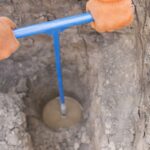 Hand Augers are a very handy tool to have when your drains clog and a plunger won’t unblock it. While a little more difficult to use than a plunger, once you have the hang of it a hand auger will clear those slightly more difficult blockages. A hand auger is made up of a metal cable coiled up in a housing with a handle. The cable is manually fed into the drain and the handle is rotated turning the cable around. The cable may have a small corkscrew or cutting head on it, so when the cable reaches the blockage it can cut through or retrieve the obstruction.
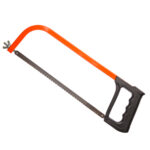 Plumbers use hacksaws to cut metal or plastic pipes, roof flashing and gutters, threaded metal and plastic pipes just to name a few of its jobs. Hacksaw blades are replaceable and come in different grades to cut different products, so it’s best to keep one on hand as they do deteriorate over time. Blades are replaced easily buy loosening the tension nut and re-tightening once the new blade is in position, just make sure you have the teeth of the blade facing in the correct direction, usually facing forward of the handle.
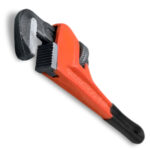 A footprint pipe wrench is used for loosening and tightening plumbing fittings and metal pipes. Usually used in pairs - one to hold the pipe in position while the other turns the pipe or fitting. When a pipe is gripped by footprints, the rotation causes the teeth on the wrench to bite into the pipe and lock it in position. You need to be mindful that this may damage the external surface, so wrapping a rag around the fitting or pipe prior may be a good idea.
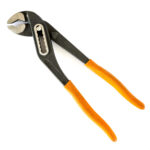 Multi Grip Pliers are great for getting a good grip on something small, they are adjustable in size so one pair does many jobs and are especially handy when you are having difficulty holding it with your hands. These tools are a DIYers dream and a must have as they are useful for so many DIY projects.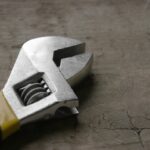
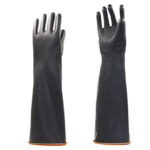 We all know plumbing can be a dirty job, so to keep you safe it’s best practise to wear a pair of heavy-duty rubber gloves when unblocking a drain. Sewers can carry harmful diseases, so when working with it you need to be mindful of keeping your hands and skin clean. The easiest way to do this is wearing PPE, protective gloves and washing your hands with soap and water.
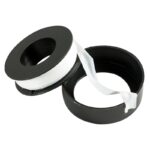 Threaded pipes require threaded tape to seal the joint and prevent leaks. Commonly called Teflon Tape, it is used on gas, water and drainage pipes. There are different products available for gas and water. Keeping a couple of rolls of Teflon in your toolbox for when you need it won’t blow the budget but will save you the heart ache when you need it.
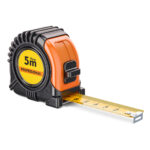 The last plumbing toolkit essential but definitely not the least, is a tape measure. Plumbers are constantly using tape measures as plumbing requires accurate measurements to be taken of pipes, fittings, and fixtures to guarantee correct installation. Remember; “measure twice and cut once” and you’ll avoid costly mistakes.

 19 Catalina Drive Tullamarine VIC 3043
 03 9335 4755
 admin@essendonplumbingservices.com.au